
Inevitable life
Light in Larry Levis

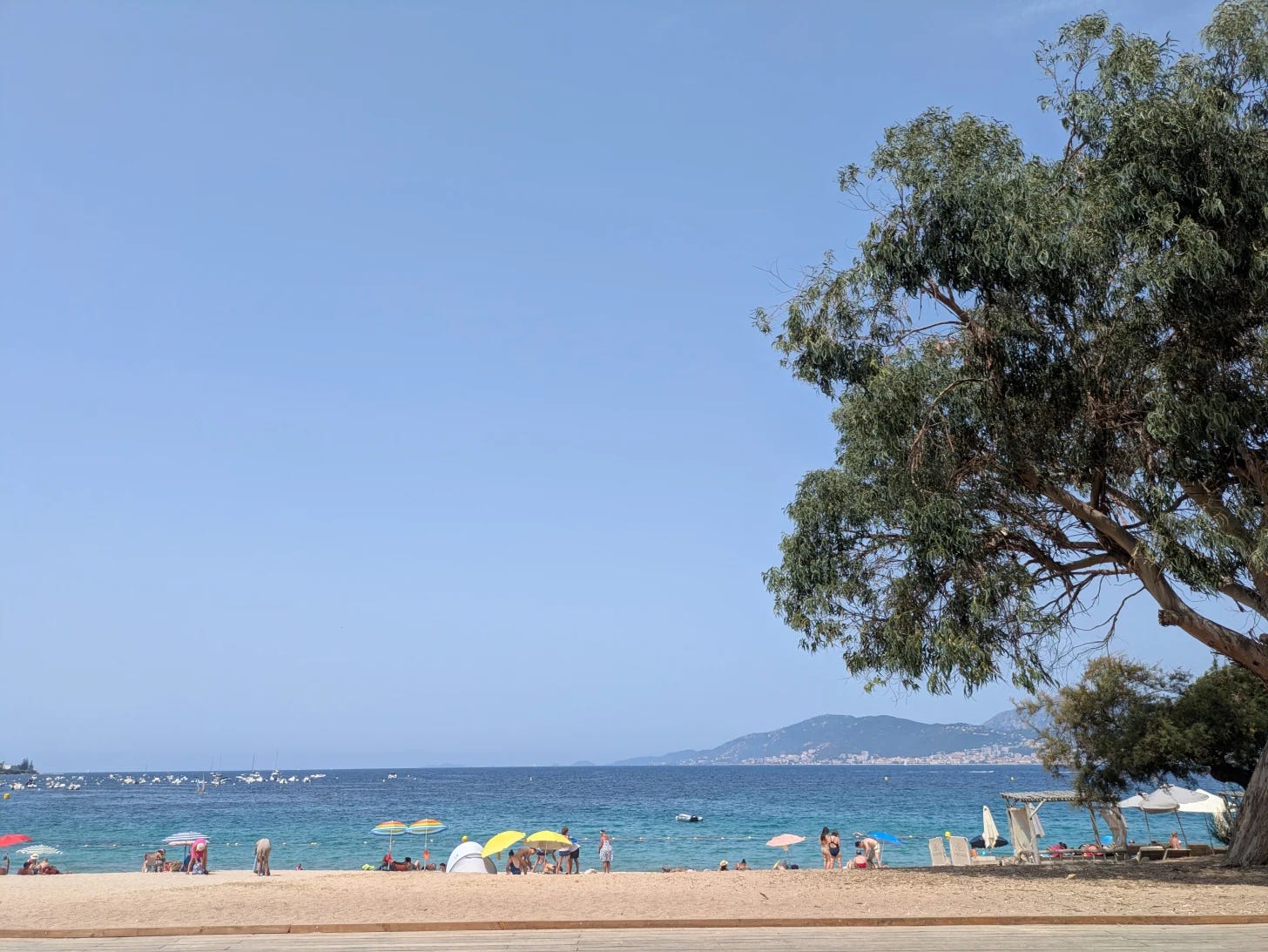
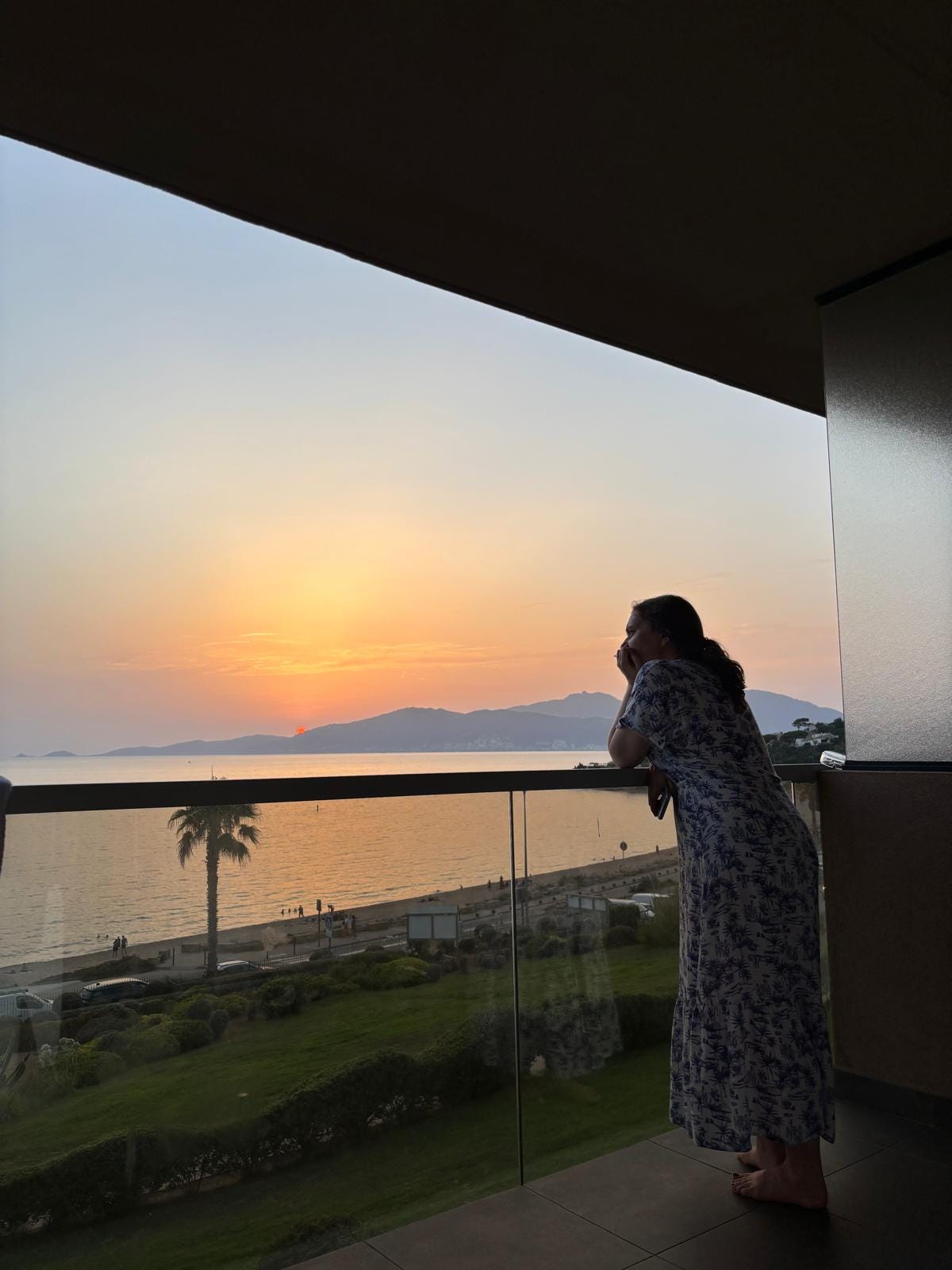
We’ve just returned from a week of vacation in Corsica.
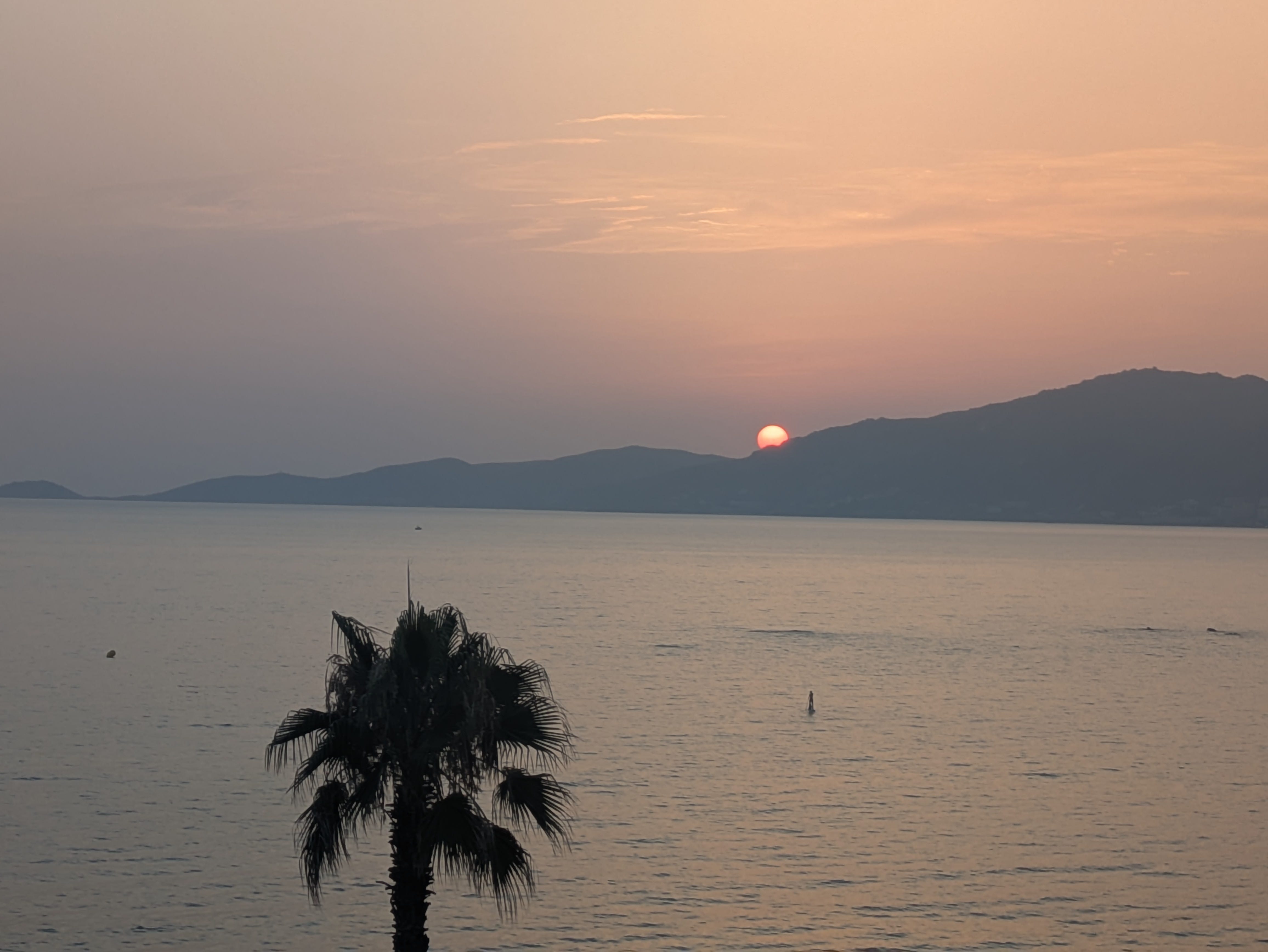
Relaxing is not something I’m good at. But when we arrived in Corsica’s constant, dependable sunshine, cocooned in the sound of the Mediterranean’s lulling waves, my body surrendered for me. I didn’t open my laptop for three whole days. My brain resurfaced halfway through, but I mostly managed to channel it into journaling. All in all, I rested. I’m relieved.
Upon returning, Paris’s lower temperatures have been another welcome respite. The heat waves this year have been brutal. It’s been great to come home and go for walks and keep the blinds open.
This week I’d like to discuss Larry Levis’s poem “In the City of Light” from his collection Winter Stars (1985). You can read it here.
Larry Levis is one of my favorites. I love his accessible yet contemplative language, and his use of landscape. I’ve never been to the San Joaquin Valley, but the vines in his poems always somehow feel familiar, as he translates his familiarity with them so well. There is something wonderfully American about his voice that recalls both Whitman and Steinbeck, yet is unique all on its own. It brings me great waves of feeling—it is Poetry.
I was immediately drawn to “In the City of Light” for its bold opening stanza:
The last thing my father did for me
Was map a way: he died, & so
Made death possible. If he could do it, I
Will also, someday, be so honored. Once,
We typically think of something that someone “does for us” as a positive act, a service of sorts. Levis surprises us: the expression rings true with “mapping a way,” but later distorts, as the destination is death. Is “making death possible” an act of service, a generous gift? Levis’s poem suddenly makes this a real question. What’s more, the revelation “he died” is written in the middle of the second line after a colon, followed by “& so,” a rather mundane placement.
Another surprise comes in the breaking of the second conditional form. Levis writes, “If he could do it, I / Will” whereas grammatically we would expect “If he could, I would” or “If he could, I could.” There is at once a sense of inevitability in the “will” but possibly also a willful desire to do as the speaker’s father has done. The surprise continues as death is described as an honor. Maybe this is ironical. Maybe not.
But Levis doesn’t leave us to ruminate, instead he encourages movement forward with the last word of the stanza “Once” followed by a comma, opening to something else.
The second stanza calls attention to the poem’s title. New York City’s noise is replaced by silence and by light as the speaker walks in the middle of the night. The third stanza ends as the first, with a suggestion of death in the curt “No sounds.” followed by “Once,” opening to the birth of the speaker’s son in the following stanza. There is a kind of teeter-totter between life in death throughout the whole poem that climaxes when the speaker confesses “This isn’t the whole story.”
The phrase “out of respect for someone missing” is repeated twice, perhaps once for the speaker’s father, then for the speaker’s lover. The speaker finally admits:
The fact is, I was still in love.
My father died, & I was still in love. I know
It’s in bad taste to say it quite this way. Tell me,
How would you say it?
For lack of a better term, the absolute mind fuck of grief is that you are still alive. You still have desires, you have feelings, you have ambitions and plans. In this way, life feels more cruel than death. How could you possibly go on—in love!—when such a pillar of your world has fallen?
My favorite moment in the poem encapsulates it perfectly:
A body wishes to be held, & held, & held, & what
Can you do about that?
Life is as inevitable as death.
As I prepare for the arrival of a baby, this poem made me feel less alone. Lately I’ve been on rollercoasters of excitement and darkness. A new family member. A missing family member.
The poem closes with “two things I want to remember / About light, & what it does to us.” The essential seems to lie in both the lover and the father, each associated with travel and transition:
Her bright, green eyes at an airport—how they widened
As in disbelief;
And my father opening the gate: a lit, & silent
City.
à la prochaine,
Rachel
Thank you, thank you! I had not heard of Larry Levis before, but this is a fabulous poem, and so true.
This is a gorgeous poem, thank you for sharing! And congrats again, I must tell you how excited I am for you on every platform! 🥰