
Perfect catharsis
Mozart's "Ach ich fühl's"

This Friday was opening night of our recital, Nuit d’étoiles.
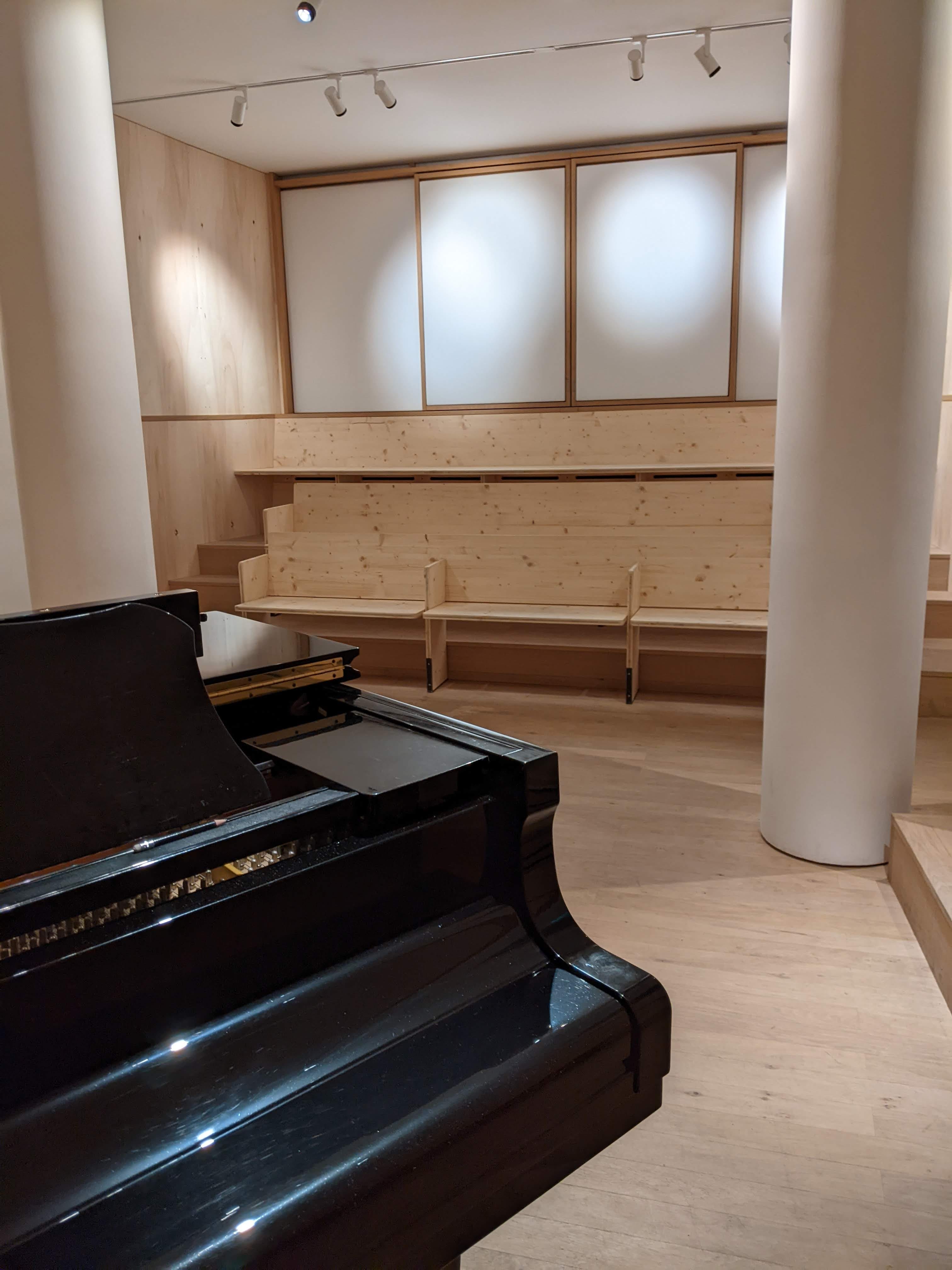
It’s been an emotional week for many reasons, but luckily I was able to channel some of those raw feelings into my music. It was great to be back in the intimate (and air conditioned) Accord Parfait studio in Montmartre.
This week I’d like to discuss one of the arias I’m singing, “Ach ich fühl's” from Mozart’s final opera Die Zauberflöte (The Magic Flute, 1791).
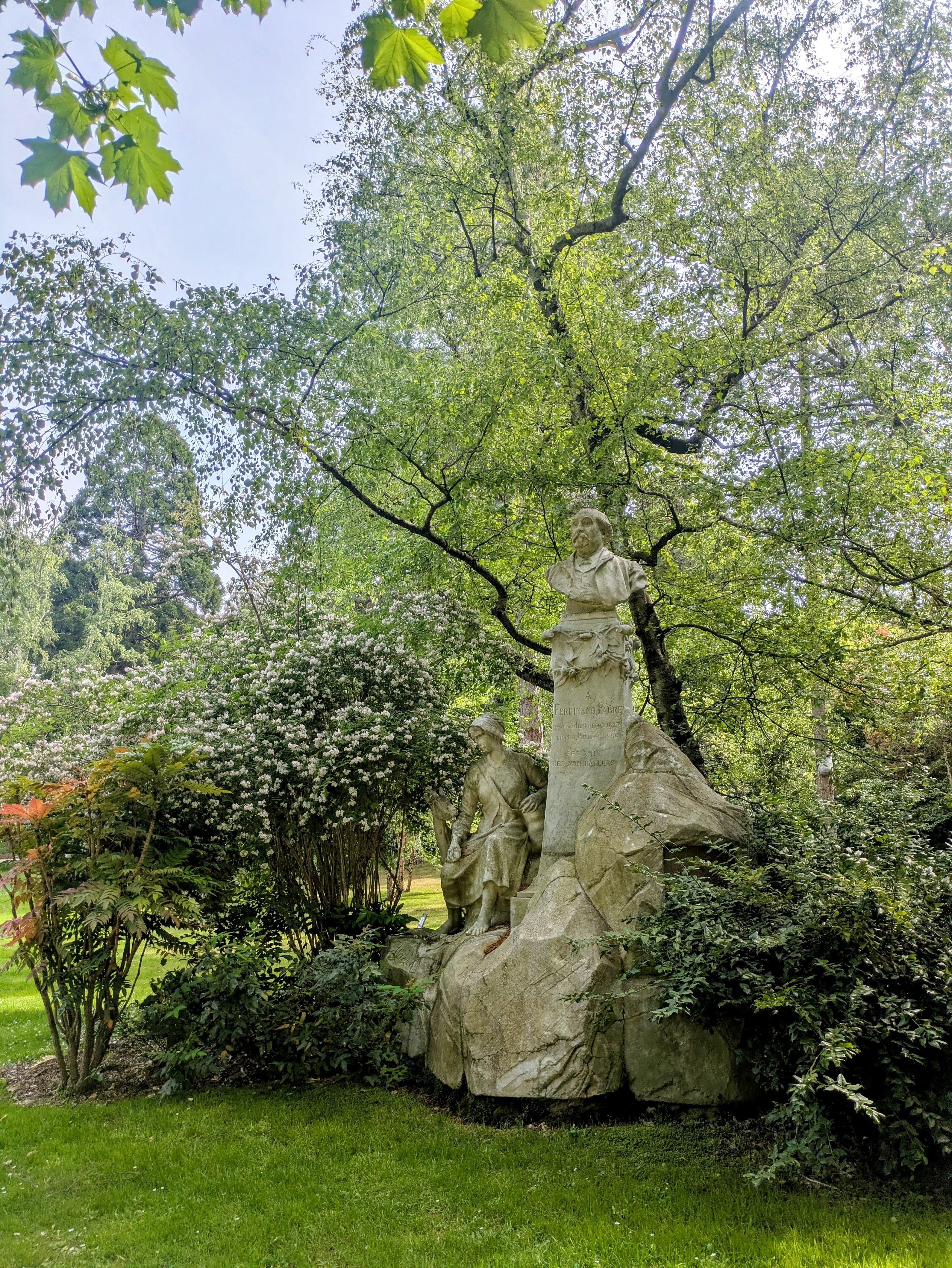
Sometimes music finds you and not the other way around.
“Ach ich fühl’s” has been part of my journey through grief. For my father’s service, we made a slideshow of photos, and I arranged a playlist of soft instrumental Beethoven and Mozart, two composers he loved, to play in the background. In the days following, I listened to that playlist while driving around my hometown and kept coming back to an instrumental version of “Ach ich fühl’s.” It took me some time to realize that I knew the melody because it was an opera aria.
That led to me listening specifically to the 1981 recording of Lucia Popp on repeat, bawling my eyes out. Something about the music got exactly at what I was feeling. But why?
Mozart’s The Magic Flute is a fairy tale-like story of good triumphing over evil. “Ach ihls fühl’s” is sung by Pamina, the daughter of the Queen of the Night, in Act II. She has fallen in love with Tamino, and when he no longer speaks to her, she is devastated, explaining in her aria that she wishes to take her own life. What she doesn’t realize is that Tamino has been assigned a vow of silence in order to be accepted into the Sorcerer Sarastro’s community, which is ultimately in the couple’s best interest.
Her aria translation reads:
Ah, I sense it has vanished!
The joy of love gone forever!
Hours of delight, you will never come
back to my heart again!
See, Tamino, these tears
are flowing for you alone, beloved.
If you do not feel love's longing
then I will find rest in death!
You can witness Pamina’s pain with this recent beautiful performance by Julie Fuchs, whose acting and singing are just stunning.
Though the aria isn’t about someone’s literal death, it is ultimately about grief. Pamina truly believes that she will never be able to speak to Tamino again, that she has lost him and her feelings of joy forever. For her, he has, in a sense, “died”: she cries out to him, and there is no response. She can no longer access him, converse with him, be with him. These are the same impossible facts we must face when a loved one passes away.
Mozart manages to convey pure human grief in his music, and it made me experience some of the wildest catharsis I have ever felt in my life. In no other piece of music have I felt quite that same level of devastation, despair, and hopelessness. The beauty of the aria lies in Pamina’s love, loyalty, and sincerity. If there is hope in the piece, it lies there, secretly tucked away in her many spinning sixteenth notes, like potential energy that later blossoms into her happy reunion with Tamino, rewarding her for her goodness.
Musically speaking, Mozart’s use of climaxes in the piece is elegant and heart-wrenching. The composition is nuanced, each delicate accidental bonding in the composition like strands in the DNA of grief. When the music changes on repeated words and phrases, it brings out all the colors of Pamina’s feelings. The aria ends rather soberly, its only fermata not on any of its high B flats but on an E flat, mirroring Pamina’s downtrodden state.
Had it not been for my personal connection to this aria I probably never would have dared to try singing it! It’s a hard one, easy to sing poorly if the voice is too heavy or controlled. Working on it improved my technique as I was forced to trust my voice. My performance wasn’t perfect, but I’m proud of the progress I made. I think having a reason to sing it also helped: part of me thought that if I could sing this aria, I could somehow purge some of my grief—and that maybe someone up there could hear me, even if I can’t hear any response.
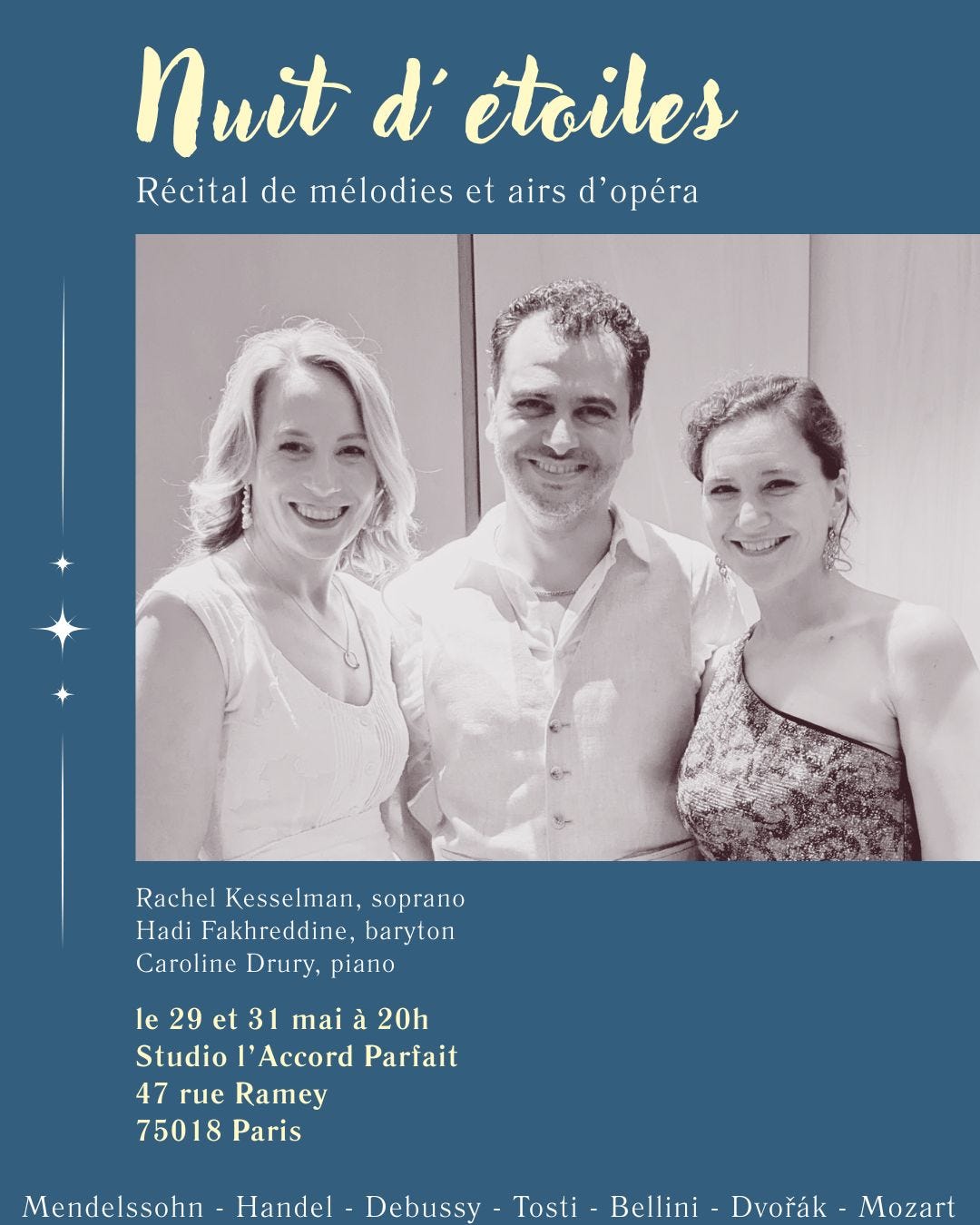
If you’re in Paris, we do hope to see you tonight at our last performance of Nuit d’étoiles!
à la prochaine,
Rachel
What a gorgeous piece! I wish I could have heard you sing it.