
Ornamented views
Discovering Jean Cancaret in Corsica

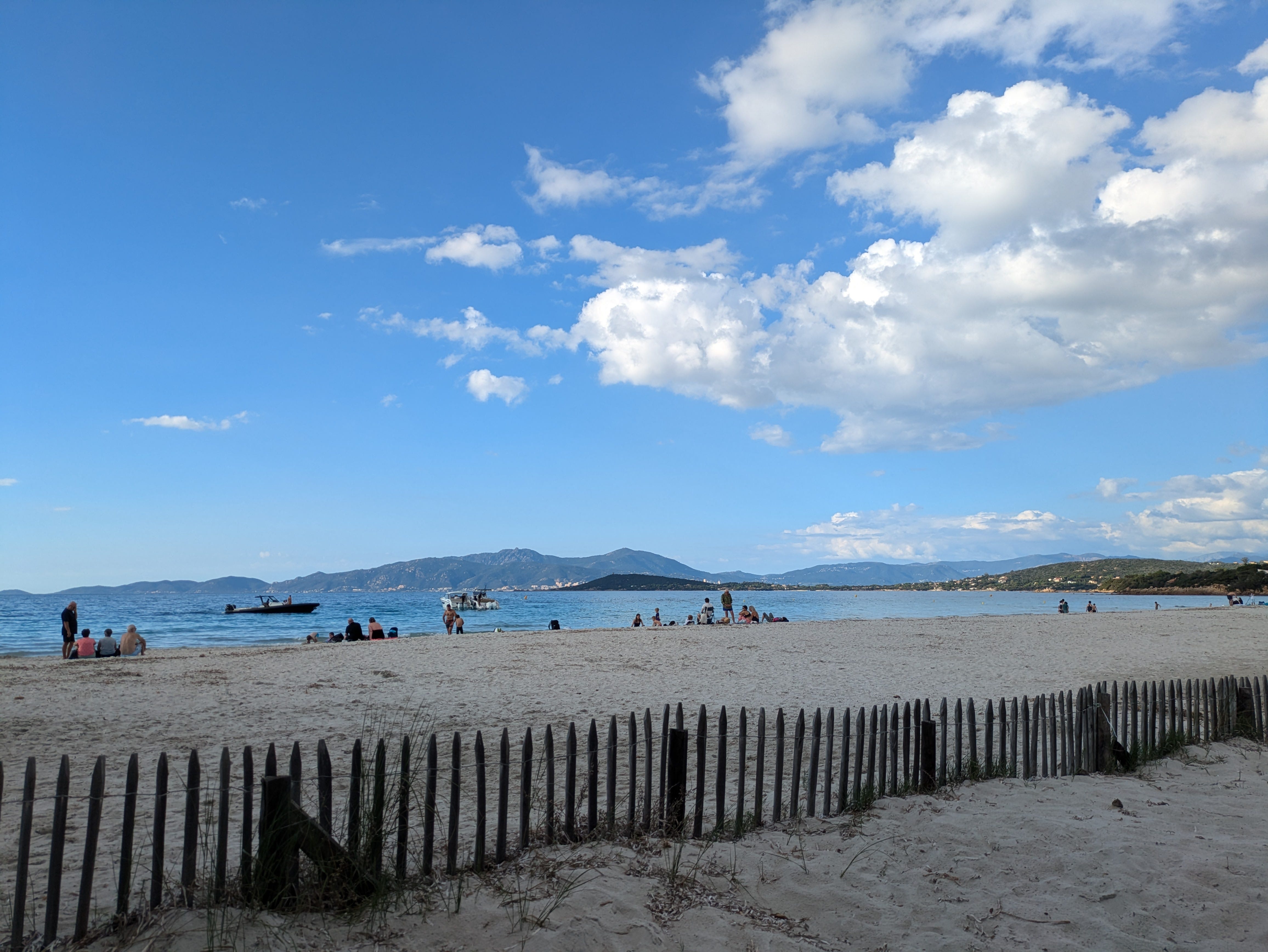
Last week I finally took a vacation. I spent five days in Ajaccio, enjoying warmer temperatures, walking along beautiful beaches, and hiking picturesque mountains. I also got to try some Corsican specialities, including different kinds of charcuterie, cheeses, chestnut cake, and inuliata.
In town, I also visited the Palais Fesch, Ajaccio’s fine art museum. This week I’d like to discuss a painting I saw there, Le soir by Jean Cancaret (1876-1941).
Before this trip, I had never heard of Jean Cancaret. The museum provided no date on the painting, and according to its website, little is known of the artist. Yet as soon as I saw Le soir, the piece captured all my attention.
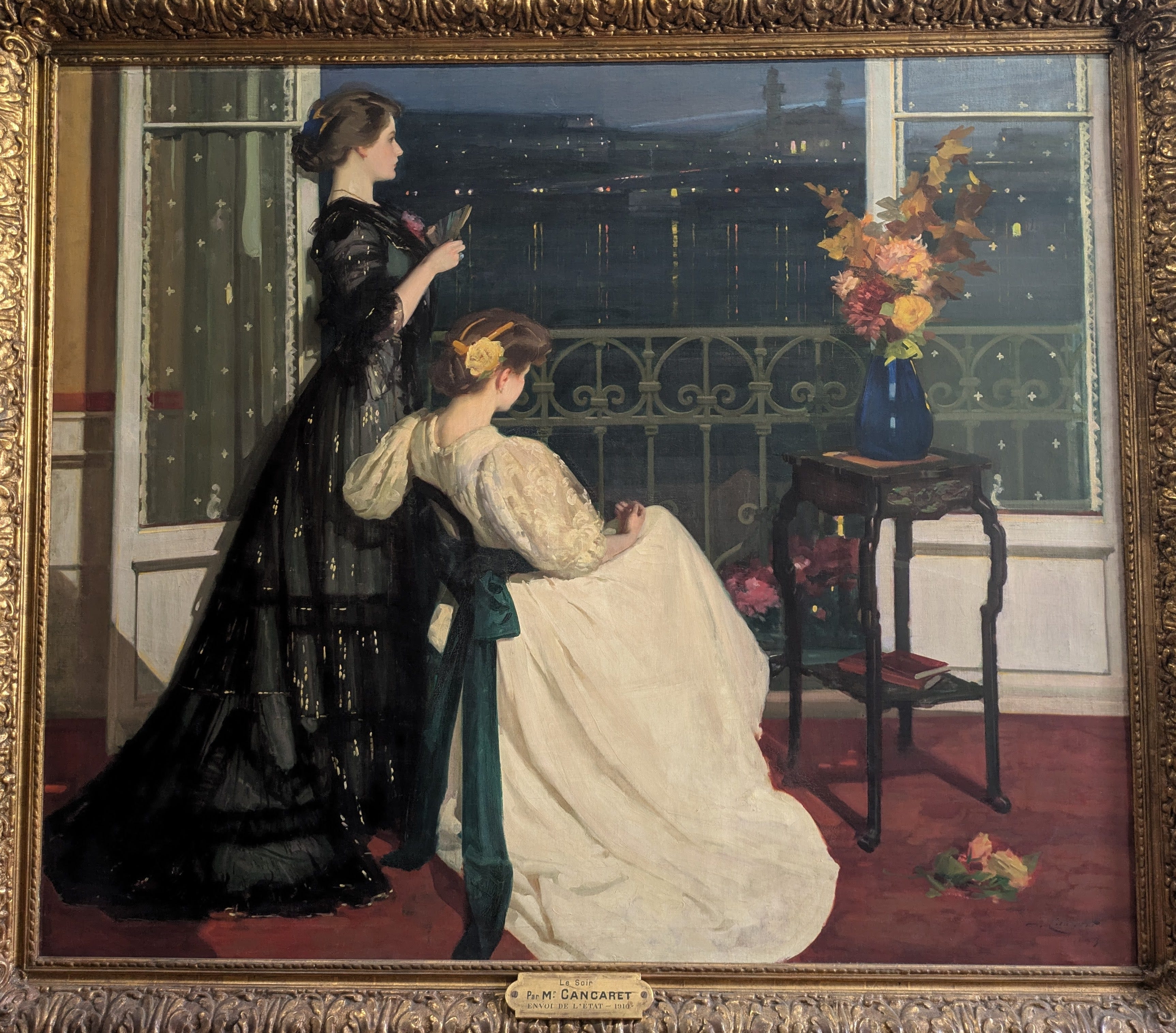
Two women look out a large French window, beyond which we can see a body of water and buildings lit up at night. One woman is dressed in black, the other in white, and neither of their faces is fully visible to the viewer. A table on the right holds a vase of flowers, some of which have fallen onto the floor. Two books sit on the table’s bottom shelf, leading us to notice additional flowers on the balcony. Evening shadows stretch behind the woman in black and beyond the table.
Standing in front of the painting, a quiet restlessness washed over me. I felt so aware of the separation between inside and out, of the beautiful, albeit limiting, wrought iron detail of the balcony, and of the small, cross-like decorations on the window. These details indicated that all the women’s views on the outside world were partially obstructed by ornaments.
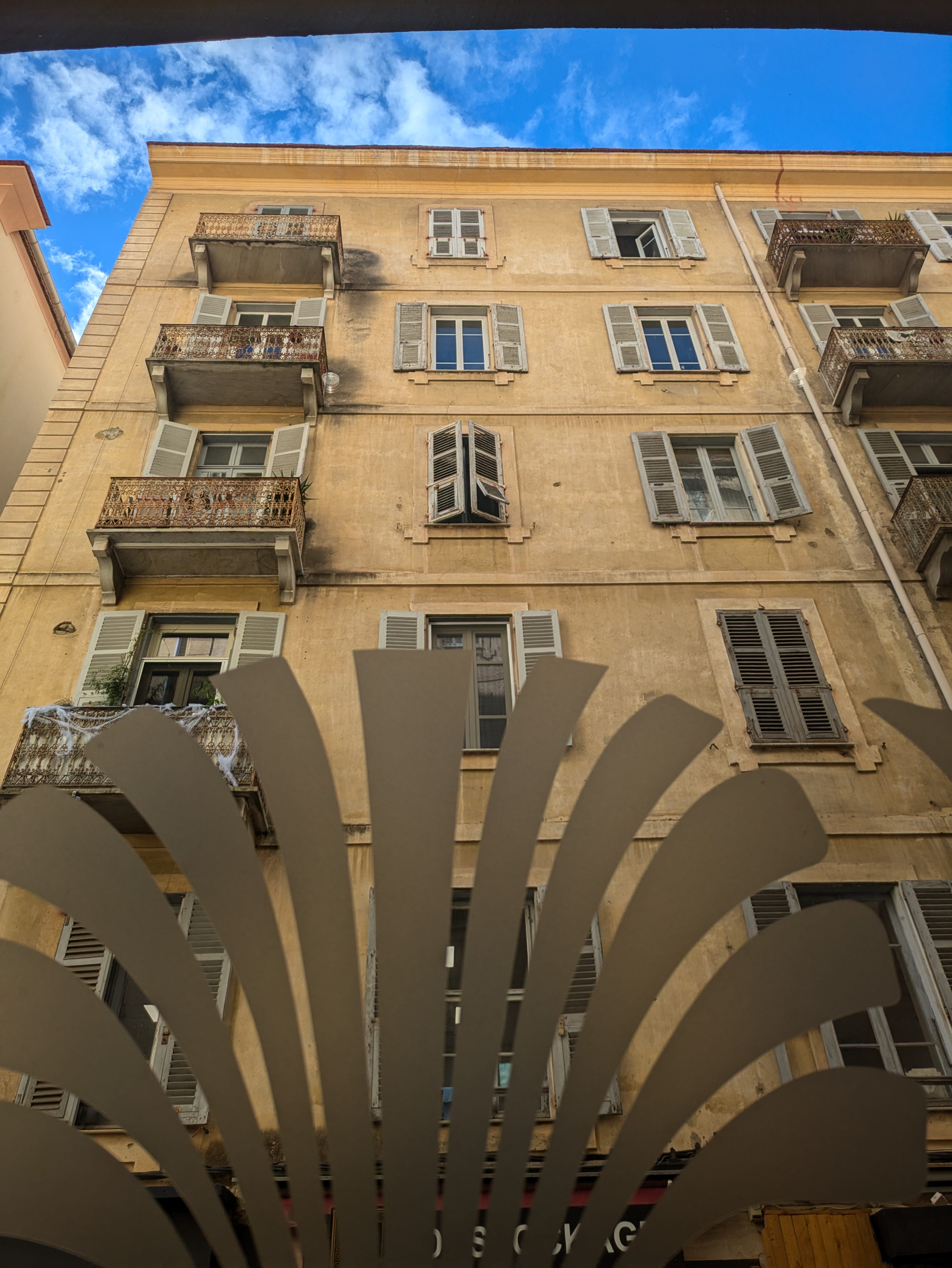
The two women in the painting occupy a liminal space similar to the American porch (which I wrote about here) that has always fascinated me as a writer. It’s unclear whether the women are enjoying the indoors or whether they long to be outside.
My suspicion is that both may be true. Like the flowers both in the vase and on the floor, or the presence of both the white and black dress, the piece offers space for both propriety and rebellion.
And while there is a stark color contrast between the deep blue night and its yellow lights outside, the contrast of light and dark is actually greater in the woman’s black dress inside.
Could it be possible that equally exciting things happen inside and out? In the domestic and in the public? Within ourselves and with others?
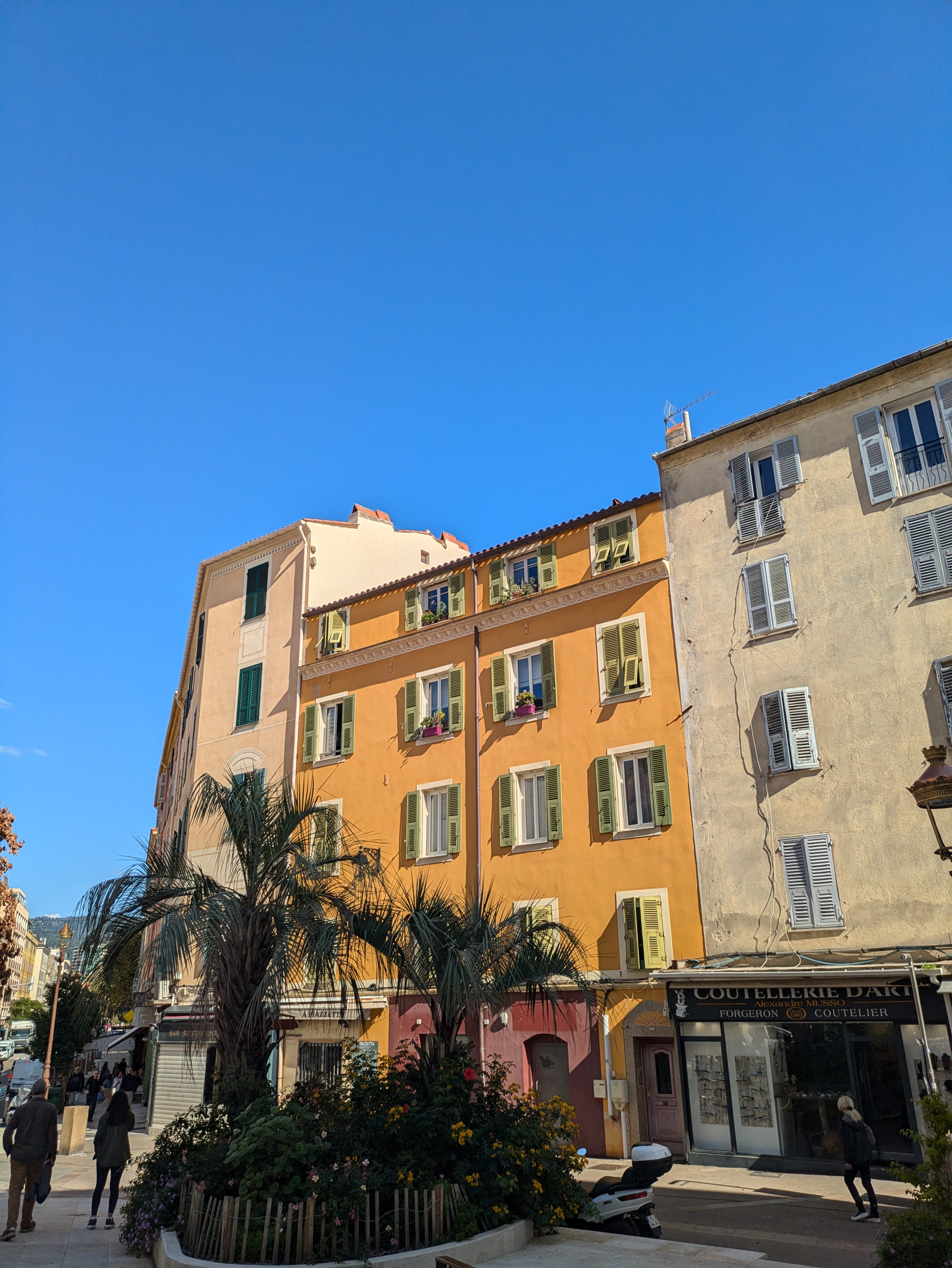
The relationship between the two women in the painting is also ambiguous, inviting many possible narratives. I can imagine them both bored at a dinner party, seeking refuge in one another’s conversation, or I can imagine the white dress indicating a recent marriage, the two women looking out into a future full of change. Their partially visible faces are liminal spaces in themselves, straddling the line between recognizable and unknown.
There is no indication of where the scene takes place. The woman’s fan hints at a warm city, but beyond that we have no real signposts. According to the museum, the architecture of the building in the distance is likely a Belle Époque casino, providing further textures of subversion. This lack of precise location allows the composition to be free of denotation and to perhaps carry greater powers of suggestion.
Its title Le soir is simple but rich. The evening is the end of the day, yet not the night, a dark time, yet full of man-made light. What time of our lives corresponds to the evening? Is it a time to celebrate or lament?
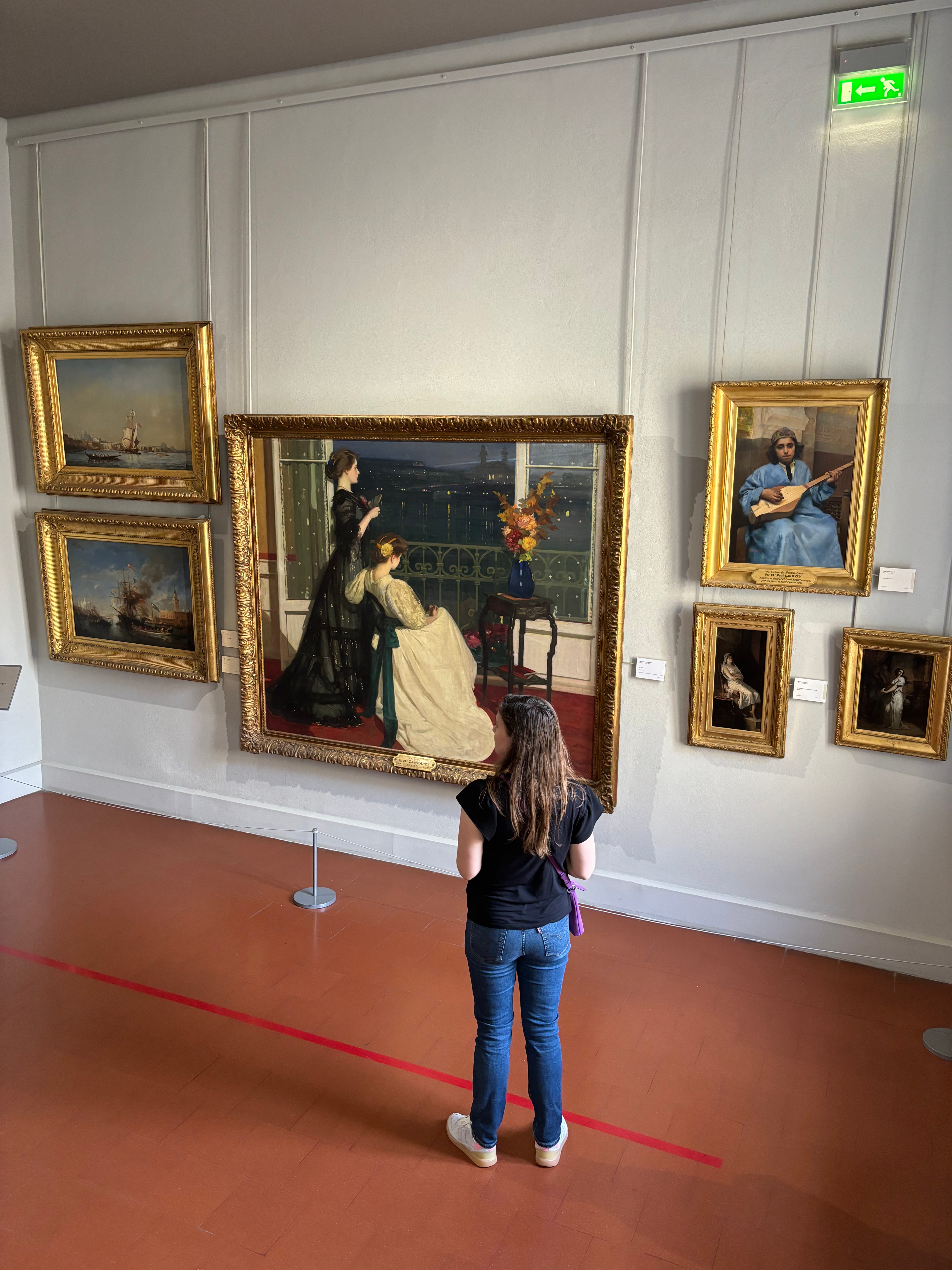
Balancing mystery and accessibility, inviting me to think, feel, and reflect, I found this painting to be a great one, and I’m really glad to have discovered it on my trip. I’ll be keeping my eyes peeled for more Jean Cancaret works in the future.
In the meantime, I’m off to a friend’s wedding in Bourgogne, then back to La Muse for our last hosted retreat of 2024. Our 2025 workshop program will be announced in January, so stay tuned for more details!
à la prochaine !
Rachel
I'm also glad you shared this painting, I loved it too! Have you heard of the NYT 10-minute challenge, where you're invited to sit with a piece of art for 10 uninterrupted minutes? I tried a shorter version with this painting; before I read the rest of your essay I zoomed in on the image and studied it for several minutes. One thing I considered was the size, and I imagined it to be somewhat small. So I was delighted when you included a picture that gave us a sense of its scale!
Here's a link to the NYT's challenge, in case you haven't tried it: https://www.nytimes.com/interactive/2024/07/20/upshot/attention-experiment.html?ogrp=dpl&unlocked_article_code=1.VU4.escp.ezFGAEPrq2b0&smid=url-share
A well deserved vacation. So glad you posted this beautiful painting.